
A service with two regional sites usually has two separate traffic decisions. First, a client resolves a service name and receives an address. Then the client connects to a destination that can direct the request to a healthy backend. An application delivery controller can participate in the second decision when it sits in the connection path. DNS-based global server load balancing can influence the first. Some platforms combine those functions, so identify the actual decision point before assigning ownership.
For a design review, draw the path using the service name, the recursive resolver, the authoritative DNS service, the regional entry point and the application pool. Attach a different question to each layer. Which site should receive a new connection? Is the regional entry point available? Which backend can serve the request? A diagram that answers those questions is more useful than a list of product categories.
What an application delivery controller sees
An application delivery controller typically sits between clients and application servers. In a deployment where it acts as a proxy, it accepts a client connection and opens or manages connections toward the server pool. Its local decision can reflect the health of individual backends and policies associated with the connection or request. The application delivery controller behavior depends on the platform and configuration.
Ask what the application delivery controller actually observes in your proposed design. A controller that terminates a client connection has different evidence from a device that simply forwards traffic. For an HTTPS service, determine where TLS terminates, who owns the certificate and whether another encrypted connection is used to reach the backend. These details affect troubleshooting and responsibility when a request fails.
Check what the application delivery controller backend health monitor measures. A reachable listener may establish that a port is open. A suitable application health check can tell you whether the service responds as intended. Choose a check appropriate to the application and document how it is evaluated. A successful monitor and a successful customer transaction are separate observations that should be compared during the pilot.
What DNS steering sees
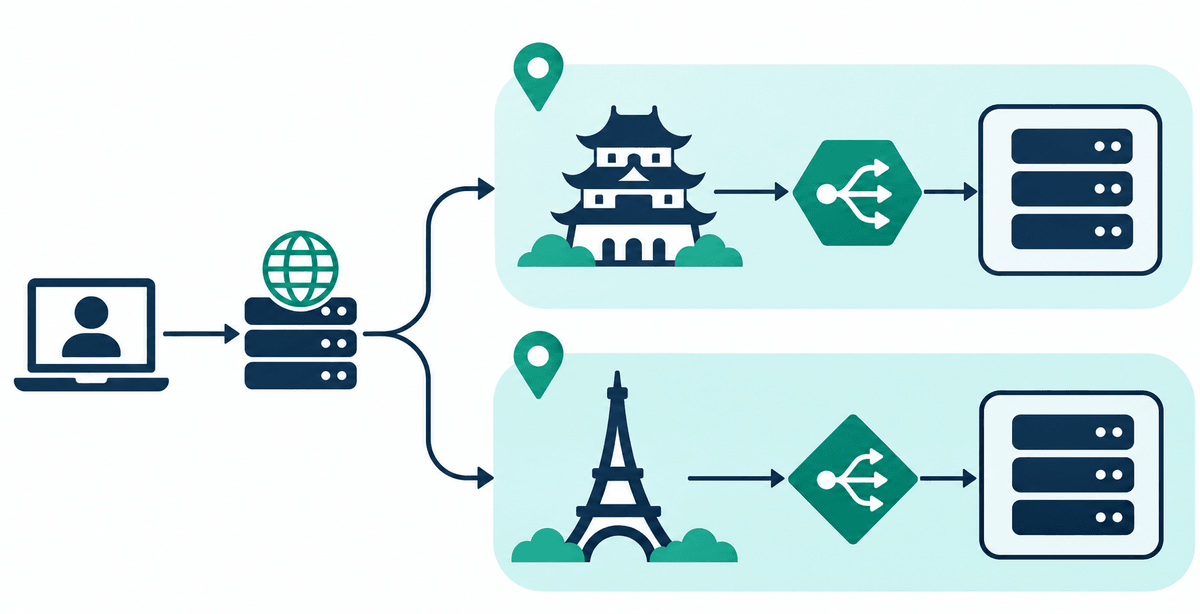
DNS-based steering selects the answer returned for a name according to the configured policies and available health evidence. A client then connects to an address in that answer. Because recursive resolvers can cache answers, a policy change does not imply that every client immediately receives a different destination. RFC 1034 explains the role of caching and TTL in the DNS model.
For a regional service, identify the address that represents each site. Determine what signal makes that site eligible for new answers and who owns that signal. A pool can have one failed backend and still serve traffic. A regional outage can make the whole destination unsuitable. Model those conditions separately so that one unhealthy server does not automatically change regional steering.
The ZDNS GSLB product page describes global traffic scheduling and health monitoring. Use it to begin a discussion about the DNS decision, health inputs and target environments. The application delivery controller and the regional application remain separate items in the architecture review unless the proposed design explicitly combines them.
Compare the evidence at both layers
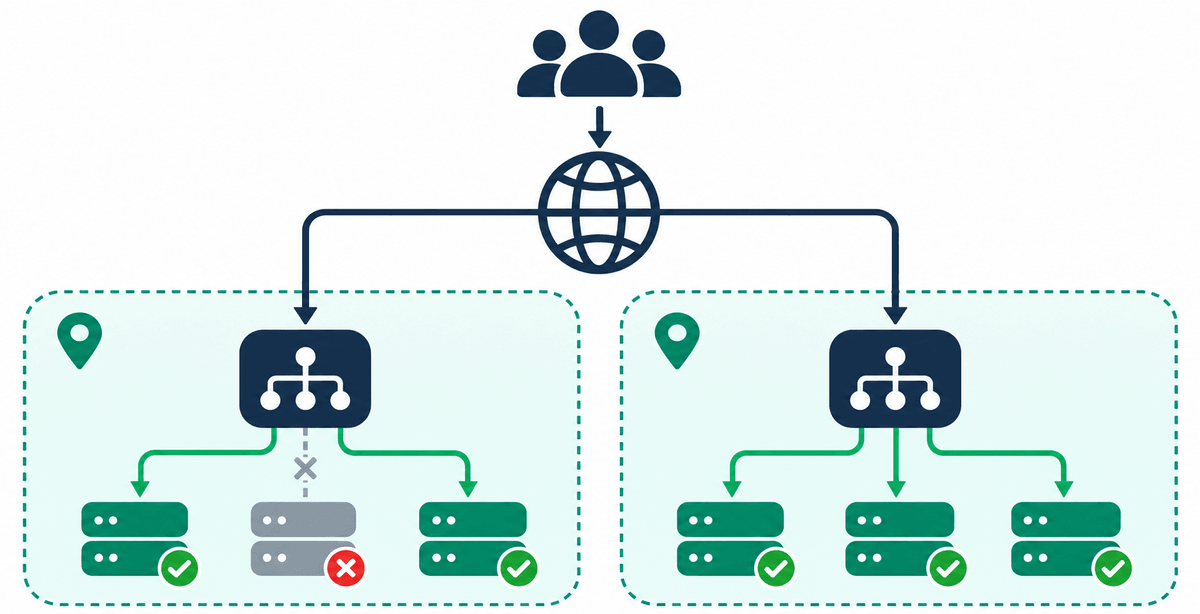
For a planned test, record the service name, client location, recursive resolver, DNS answer and observation time. Then record the destination actually reached, the regional entry point and the application response. A DNS answer identifies where a client was directed. A successful response establishes that the tested path served the request. Keep both observations so that the team can distinguish a steering issue from a local delivery issue.
Suppose an application server is removed from one regional pool during a maintenance test. The local application delivery controller can direct new requests to other healthy backends, subject to its configuration. DNS steering may continue returning that region if the regional service remains available. That outcome can be correct. It demonstrates that each layer reacted to the scope of the change.
Now consider an approved exercise in which the regional service is removed from eligibility. Review how the authoritative DNS answer changes, how long representative recursive answers remain cached and whether new client connections reach the intended region. Existing connections may behave differently from new connections. Record the two outcomes separately and agree on what an operator should tell users during the transition.
Set ownership for maintenance and recovery
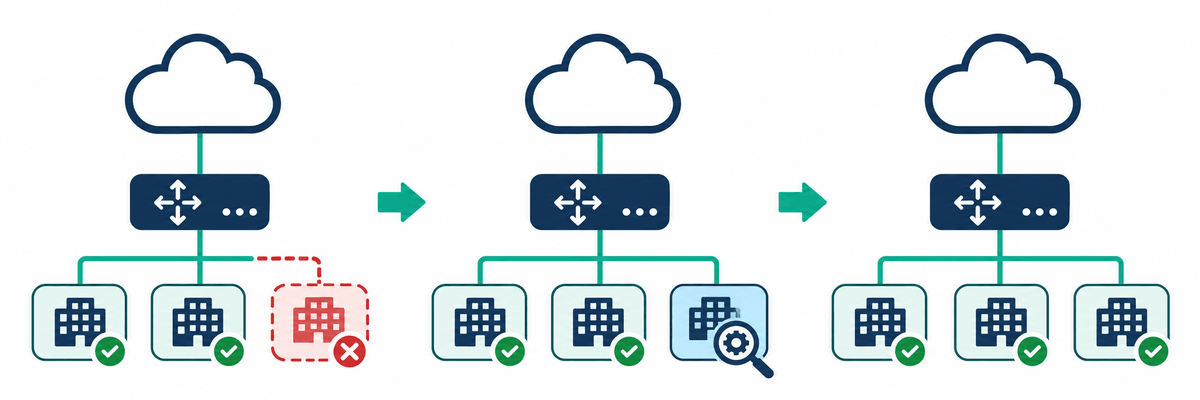
Assign an owner to local pool membership, regional eligibility, DNS policy and application health. If more than one team can change a control, define who coordinates planned maintenance and who can restore service. A troubleshooting record should say which layer was changed, when it changed and which evidence supports the decision.
For maintenance, agree on the order in which new traffic should stop arriving and how existing requests should drain. The application delivery controller may have local drain controls. DNS steering affects the addresses offered to clients, subject to cache behavior. The teams should plan the two actions together and test their expectations on a representative service.
For recovery, compare the observations with the design before returning a site to eligibility. Confirm the application response and regional entry point, then verify what answers are returned for the service name. Record any difference between a resolver that has already refreshed and one that is still using a cached answer. That evidence helps explain why different users may see recovery at different times.
Use an acceptance test with two failure scopes
A useful pilot covers a single backend issue and a regional issue. Include at least one ordinary request before the change and a comparable request after recovery. For each observation, record the expected decision at both layers. If the outcome differs, identify whether the DNS policy, regional target, local pool or application itself needs review.
Ask the supplier to explain which signals are collected by the application delivery controller and which are available to the DNS steering service. Request a clear account of how health evidence reaches the decision point. If a signal is stale or missing, verify what behavior the design specifies rather than inferring it from a single successful request.
If your project includes an application delivery controller and DNS-based steering, review your DNS steering requirements with ZDNS. Bring the service names, regional destinations, health signals and maintenance requirements. A review grounded in these details can define where each decision belongs and what evidence your operations team needs after a change.