
What a Platform Should Actually Cover
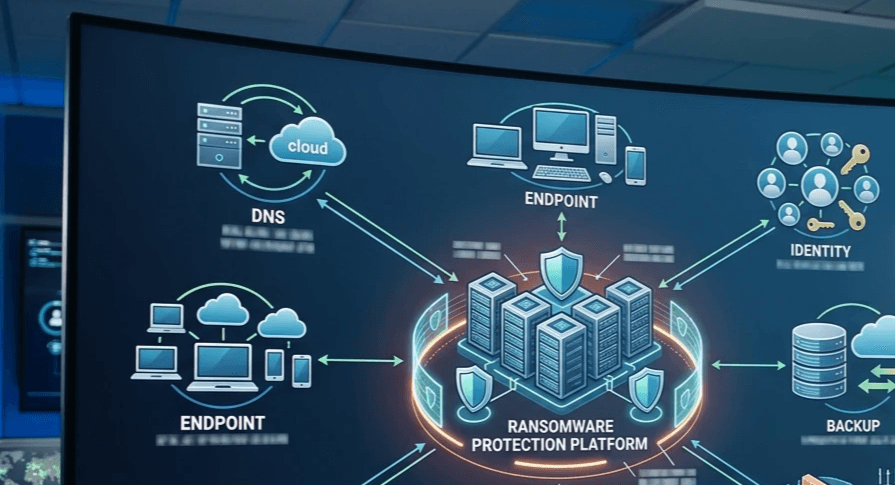
A strong ransomware protection platform strategy should cover the ransomware lifecycle. That includes reducing initial access, hardening identities, detecting malicious behavior, limiting lateral movement, protecting data, preserving recovery paths, and supporting incident response. No single layer can do this alone. The platform may be a product suite, a collection of integrated tools, or a managed service, but it should produce usable evidence across the environment.
NIST's ransomware profile is useful because it frames ransomware readiness through risk management outcomes rather than one product class. A buyer should ask how each control contributes to identify, protect, detect, respond, and recover work. If a platform only improves detection but leaves recovery, access control, and asset visibility weak, it is incomplete.
Network Evidence Is Platform Evidence
During a ransomware investigation, network evidence answers practical questions. Which device queried a suspicious domain? Which IP address touched a sensitive service? Which subnet is affected? Which DHCP scope assigned the address? Which DNS names point to the compromised workload? Which unmanaged endpoint joined the network before the event? Which application locations are safe to restore first?
These questions do not belong only to the network team. They affect executive decisions about containment, business continuity, customer communication, and recovery priority. A ransomware protection platform that cannot consume or correlate network evidence may leave responders with blind spots when speed matters most.
DNS Capabilities to Look For
DNS should be part of platform evaluation because it provides both control and evidence. Useful DNS capabilities include managed resolver paths, policy controls, suspicious domain visibility, interception logs, resolver health monitoring, source-based policy, and clear distinction between policy blocks and infrastructure failures. DNS data should be searchable and usable during incident response.
ZDNS's DNS page includes security capabilities such as interception logs and alerts, protocol security topics, recursive resolution control, and access-control concepts. In a ransomware platform strategy, these capabilities can support detection and containment workflows. They should be integrated with endpoint, SIEM, SOAR, identity, and case-management tools where possible.
NACS and Segmentation Questions
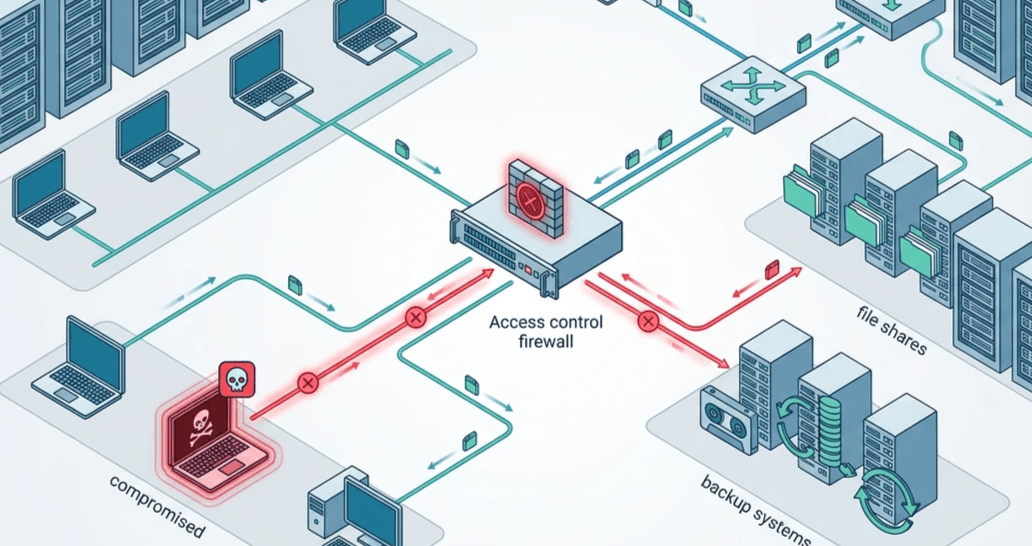
Ransomware protection platforms often promise containment, but containment depends on access boundaries. If every endpoint can reach sensitive file shares, identity systems, management interfaces, and backup repositories, detection may arrive too late. Network access control helps enforce who and what belongs on the network. It also helps identify unknown or noncompliant devices before they become part of the attack path.
When evaluating platform fit, ask whether device visibility, network access rules, topology discovery, and unauthorized access prevention are part of the operating model. ZDNS NACS is relevant here because network access control supports ransomware defense by reducing uncontrolled connectivity and improving device context.
IPAM and DHCP: The Scope Layer
Endpoint and identity tools may show user, host, and process details. Network tools often show IP addresses. IPAM and DHCP connect those worlds. IPAM records address ownership, subnet purpose, and lifecycle history. DHCP data can show which device received which address and configuration. Together, they help responders scope incidents accurately.
ZDNS's IPAM page includes dynamic address sensing, endpoint asset profiles, network device integration, and lifecycle address history. ZDNS's DHCP page supports address allocation and endpoint configuration context. These are not glamorous controls, but they are crucial when a ransomware platform needs to answer "what was affected?" without hours of manual reconstruction.
Platform Evaluation Checklist
Use the following checklist when reviewing ransomware protection platforms and adjacent infrastructure:
- Can the platform identify known, unknown, and unmanaged devices on the network?
- Can DNS queries be tied to endpoints, subnets, resolver paths, and policy decisions?
- Can IP addresses be mapped to owners, services, DHCP history, and DNS names quickly?
- Can access policy limit lateral movement to file shares, backups, and administrative systems?
- Can backup restoration be tested with DNS, DHCP, identity, and application dependencies included?
- Can routing, GSLB, or failover paths support recovery when one location is isolated?
- Can evidence be exported or integrated into incident response workflows?
These questions expose whether the platform is only a detection tool or part of a broader resilience system. Ransomware protection is strongest when operational teams can act on evidence rather than merely acknowledge alerts.
Recovery Requires Infrastructure Services
After ransomware, recovery depends on more than restoring files. Users need DNS resolution. Endpoints need network configuration. Applications need correct addresses. Security teams need access control. Backup systems need isolated trust. If these infrastructure services are not included in recovery planning, a business may restore servers but still fail to resume operations.
ZDNS's DDI product areas are relevant because DNS, DHCP, and IPAM are part of the service restoration path. For multi-site applications, ZDNS GSLB can also fit availability planning where DNS-based steering is appropriate. A ransomware protection platform should account for how users are directed to restored or alternate service locations.
Integration Matters More Than Dashboard Count
Many platform evaluations focus on the number of dashboards, engines, or detection categories. Those features matter, but integration quality matters more during a real incident. A responder should not have to manually copy an IP address from one console, search a DHCP lease table in another, ask the network team for switch context, and then open a separate DNS log system to find a suspicious domain. The platform strategy should shorten that path.
Network context should be available where decisions are made. A DNS event should point toward the likely endpoint and network segment. An endpoint alert should show whether the device was on a trusted network, guest network, VPN path, or sensitive production segment. An IPAM record should help identify the service owner and address lifecycle. A DHCP record should show assignment timing. When this evidence is connected, teams can isolate with more confidence and avoid broad shutdowns that harm unaffected services.
Metrics for Platform Readiness
Buyers should ask for measurable outcomes, not only feature lists. Useful ransomware readiness metrics include time to identify the first affected endpoint, time to map an IP address to a device and owner, percentage of critical services with tested restore plans, percentage of unmanaged devices discovered, percentage of high-risk segments with access controls, and time to confirm whether DNS policy blocked or allowed a suspicious domain.
These metrics make network-layer investment easier to justify. They show whether the organization is becoming faster, clearer, and more resilient. They also help security and infrastructure teams work from the same evidence base. A platform that improves these metrics is more valuable than one that only adds another alert stream.
Avoid Overpromising Platform Outcomes
Security buyers should be wary of claims that imply ransomware can be completely prevented. Mature attackers adapt. Users make mistakes. Credentials are stolen. Vulnerabilities appear. What matters is reducing risk, detecting activity earlier, limiting blast radius, and recovering faster. A platform should be judged by measurable operational outcomes: reduced unmanaged access, faster scoping, cleaner restoration tests, better alert context, and more reliable evidence.
This is also the right way to position ZDNS. It can contribute to those outcomes through DNS, NACS, IPAM, DHCP, and GSLB capabilities. It should not be framed as a cure-all anti-ransomware answer. The credible message is that network foundation data improves the quality of ransomware prevention and response.
Conclusion
A ransomware protection platform should not ignore the network layer. DNS, access control, IPAM, DHCP, routing, and availability planning all affect how ransomware enters, spreads, is detected, is contained, and is recovered from. ZDNS supports the network foundation that a larger ransomware protection strategy needs: observable DNS behavior, device access context, address ownership, endpoint configuration, and service resilience.