
IPAM, or IP address management, is the practice of planning, allocating, tracking, and governing the addresses and prefixes used across a network. Its most valuable outcome is not a prettier list of subnets. It is an authoritative record that network, cloud, security, and infrastructure teams can use when they need to make a change or explain an event.
Two questions reveal whether an IPAM program is truly authoritative. Can the team quickly identify the owner, device, network, and status associated with an address today? Can it retrieve the same context for the exact time of an incident yesterday? If either answer depends on searching spreadsheets, asking several administrators, or comparing unrelated consoles, the organization has address data but not a dependable operating record.
ZDNS positions enterprise IPAM around address-space planning, dynamic and static allocation, proactive discovery, endpoint asset analysis, historical traceability, integrations, and reporting. Those capabilities fit into four connected layers that turn address records into operational evidence.
Authoritative Does Not Mean Infallible
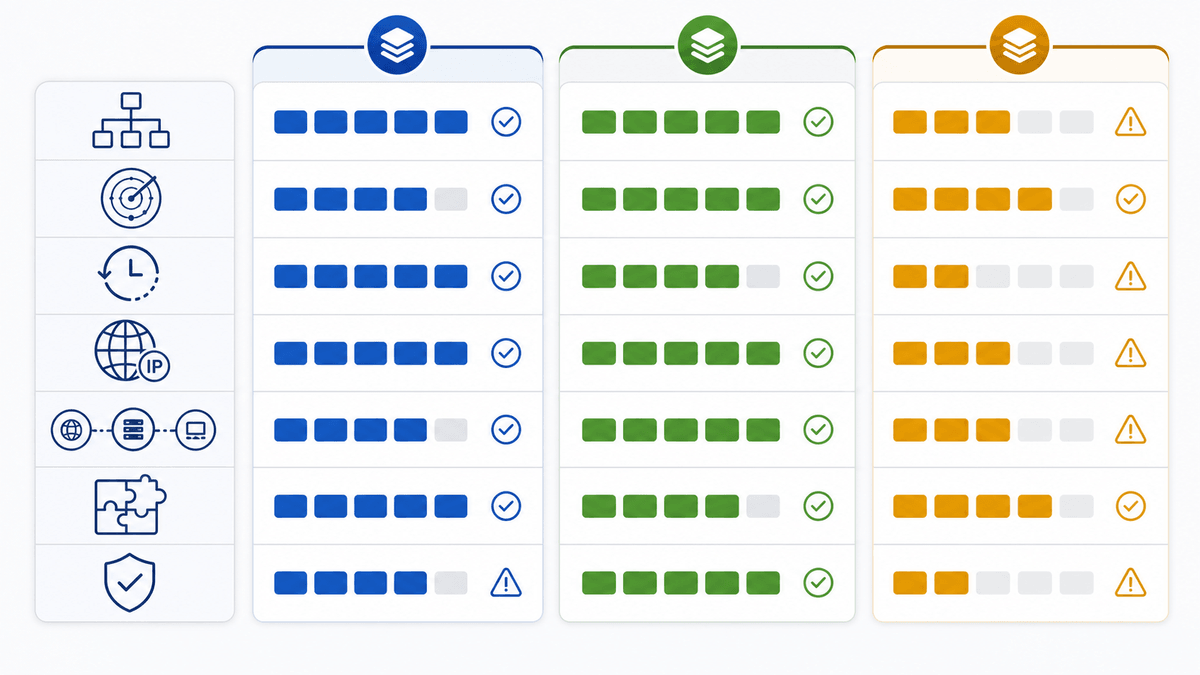
An authoritative IPAM system is the accepted control point for address intent and lifecycle state. It defines which blocks belong to the organization, how they are divided, who owns them, which ranges are available, and how assignments are recorded. Other systems can contribute facts, but conflicts are resolved through a documented process rather than silently producing several competing answers.
Authority does not mean every record is automatically correct. Networks change. Devices appear outside the request process, cloud resources are created quickly, and integrations can fail. An authoritative system must expose uncertainty, timestamp its observations, and create exceptions when planned state disagrees with discovered state.
The distinction is important. A spreadsheet can be declared the official list while becoming less accurate every day. A useful IPAM platform combines governance with discovery, history, and reconciliation so that authority is continuously earned.
Layer 1: Establish the Address Source of Truth
The foundation is a structured address hierarchy. Aggregate blocks should be divided according to routing, geography, site, environment, security zone, business service, or another model the organization can maintain. Every network needs an owner, purpose, lifecycle state, allocation policy, and relationship to its parent and child ranges.
The hierarchy should cover IPv4 and IPv6 without pretending they are identical. IPv4 planning often emphasizes scarcity and utilization. IPv6 planning emphasizes prefix delegation, bit-level hierarchy, routing aggregation, and consistent policy. ZDNS IPAM supports visual address-space planning and semantic templates for bit-width-based IPv6 management.
Allocation workflows then preserve uniqueness. Dynamic pools, static infrastructure, reservations, cloud networks, and special-use ranges must draw from approved space. The system should record who requested an allocation, what approved it, when it became active, and when it can be reclaimed.
This source of truth also provides context to DHCP address allocation. DHCP delivers addresses to clients; IPAM shows how the scope fits the approved plan and whether the remaining capacity supports the intended network role.
Layer 2: Compare Intent with Continuous Discovery
Planned state must be tested against the network. A newly connected device may use an undocumented static address. A decommissioned system may leave an old reservation. A cloud workload may appear in an approved subnet without the required ownership data. Discovery provides the observations needed to find these differences.
ZDNS IPAM describes periodic address scanning through ICMP, ARP, NetBIOS, and Nmap, along with external network-device and switch integration. These methods can contribute reachability, endpoint, MAC, and interface evidence. No method sees everything, so results should include collection time, source, and confidence.
Discovery should generate actionable categories:
- Observed addresses that have no approved IPAM record.
- Addresses marked available while activity is detected.
- Reserved addresses with no recent evidence of use.
- Duplicate or conflicting address claims.
- Devices connected through unexpected network interfaces.
- Subnets whose utilization differs materially from planned capacity.
An exception needs an owner and resolution deadline. Otherwise, discovery becomes a growing list of warnings rather than a mechanism for improving data quality.
Layer 3: Connect IPAM with Operational Systems
IPAM becomes more reliable when it exchanges data with the systems that assign, name, observe, and authorize endpoints. DDI is the most direct relationship. DHCP provides lease and client information. DNS resolution management provides names and record relationships. IPAM supplies the address hierarchy, ownership, and lifecycle.
Other integrations add business and access context. A CMDB can identify the service owner and application role. Directory or authentication systems can add organizational identity. Network devices can bind an address and MAC to a physical interface. Network access control visibility can add compliance, topology, and access-state evidence.
Integration should not mean copying every available field into IPAM. Define which system owns each attribute, how conflicts are resolved, and how stale data is handled. A CMDB may own the business-service identifier while IPAM owns the approved subnet and current address status. DHCP is authoritative for a lease event, while IPAM preserves the broader lifecycle context.
Interfaces also need monitoring. Track failed imports, delayed updates, duplicate identifiers, rejected records, and schema changes. An integration that stopped three weeks ago can make a polished dashboard dangerously convincing.
Layer 4: Turn History into Network Intelligence
Current state is necessary for provisioning. Historical state is necessary for investigation. An IP address can belong to several devices over time. A hostname can change. A subnet can move between owners. If new data overwrites old data, the organization loses the ability to reconstruct events.
ZDNS IPAM describes full lifecycle address history traceback, including status changes, information changes, recovery related to alarm events, historical-time selection, and export. The product page also lists network and pool utilization reports, message and performance statistics, customizable reporting, and scheduled delivery.
History should answer:
- Which endpoint used an address at a specified time?
- Which network and owner applied then?
- Was the assignment static, dynamic, bound, or discovered?
- Which DHCP lease and DNS record were associated with it?
- What changed before and after the event?
- Which system or operator made the change?
Reporting should also support planning. Trends in utilization, unknown endpoints, stale reservations, allocation lead time, and exception age show where operations are losing control. A report is valuable when it drives a decision, not when it merely counts objects.
Separate Today-State from Event-Time Evidence
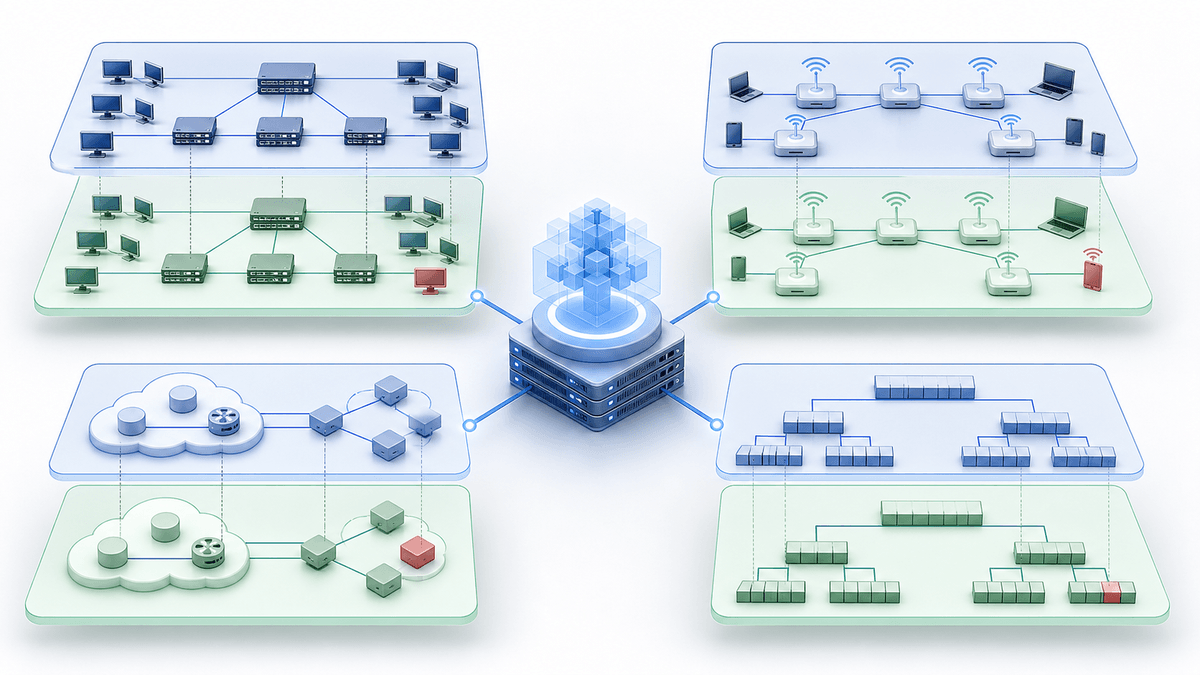
Many investigations begin with an address copied from a log. The analyst searches IPAM and finds the current owner. That answer can be wrong for the event if the address was reassigned after the log was created.
An authoritative workflow begins with the event timestamp and time zone. It retrieves address history, DHCP transactions, DNS context, endpoint identity, and network location for that time. Current state is then used to understand what happened afterward, not as a substitute for historical evidence.
This approach also improves audit responses. Instead of presenting a current spreadsheet and assuming it reflects the past, teams can provide a time-bounded record with sources and changes. Retention should be set according to operational, legal, and privacy requirements rather than unlimited collection by default.
Design the Operating Model around Data Quality
IPAM ownership must be explicit. Network teams may govern address hierarchy, cloud teams may create virtual networks, service teams may request addresses, and security teams may consume historical context. Define who can allocate, approve, modify, discover, reconcile, and retire records.
Required fields should be few enough to maintain and strong enough to support decisions. Typical requirements include owner, purpose, environment, location, routing domain, lifecycle state, request reference, and expected review date. Naming conventions should be searchable and consistent across sites.
A practical review rhythm includes daily conflict and unknown-address checks, weekly integration-health review, monthly capacity and stale-record cleanup, and quarterly ownership and hierarchy audits. High-change cloud environments may need shorter discovery intervals and automated exception routing.
Measure Whether IPAM Is Becoming Authoritative
Success should be visible in the data and the workflow. Useful measures include the percentage of networks with a valid owner, the percentage of active addresses confirmed by discovery, unresolved conflict age, stale reservation count, integration delay, allocation lead time, and time required to identify the historical owner of an address.
Test the system with real questions. Select a current endpoint and ask the operations team to identify its address, network, name, owner, and switch context. Select an address from a historical incident and ask the same questions for the event time. Record how many systems, manual handoffs, and minutes are required.
The goal is not a claim of perfect visibility. It is a controlled process that finds gaps, preserves history, and produces increasingly trustworthy answers.
A Phased Path from Lists to Authority
Begin by importing and cleaning the address hierarchy. Establish ownership and lifecycle fields before adding every possible integration. Then connect DHCP and DNS, enable discovery for selected networks, and build exception queues. Add CMDB, authentication, access, and automation systems only after source ownership is clear.
Preserve the original data during migration and reconcile duplicates rather than flattening them into one value. Pilot with a representative site or service, validate current and historical queries, and document rollback. Expand when the operating team can resolve the exceptions the new visibility creates.
ZDNS IPAM can support this progression with planning, multiple allocation types, discovery, lifecycle history, reporting, and third-party integration points. The exact deployment should be validated against the organization's platforms, data sources, and retention requirements.
Conclusion
IPAM becomes authoritative when it combines four layers: a governed source of truth, continuous discovery, controlled interoperability, and time-aware reporting. A list of addresses provides only the first layer.
Organizations should judge IPAM by the questions it can answer and the confidence behind those answers. When teams can identify who owns an address now, who owned it during an earlier event, how it was allocated, and what systems support the conclusion, IPAM has become part of the network's operational control plane.