
Network access control, commonly called NAC, applies rules to determine which users and devices can connect to a network, what they can reach, and what should happen when their identity or security state changes. A modern NAC program is not only a login checkpoint. It combines discovery, identification, authentication, compliance evaluation, authorization, enforcement, monitoring, and response.
That broader role matters because network location is no longer a sufficient basis for trust. A device connected inside an office can be unknown, misconfigured, compromised, or attached through an unauthorized wireless path. A legitimate employee can use an unmanaged endpoint. Printers, cameras, phones, sensors, medical devices, and operational systems may not support the same authentication methods as managed workstations.
ZDNS positions network access control visibility around automatic access blocking, terminal compliance inspection, web asset identification, topology discovery, network operations, user identification, and unauthorized external connection detection. These capabilities fit into a continuous decision model that begins before access and continues throughout the session.
Move Beyond Trust Based on Network Location
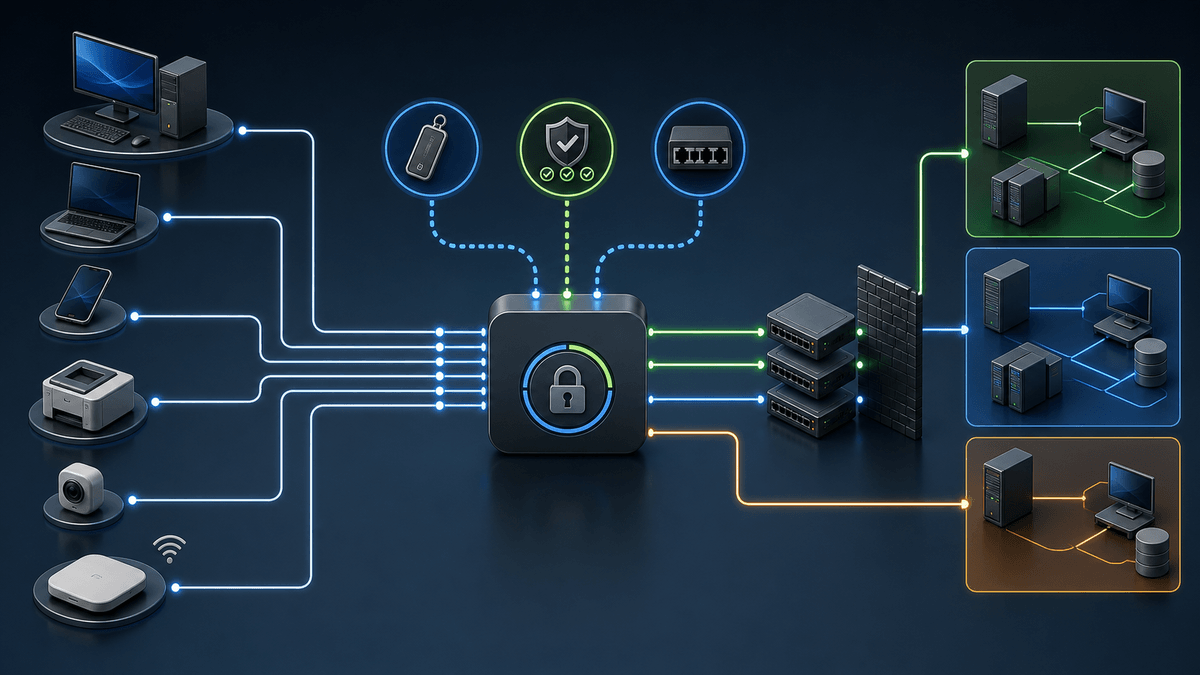
Traditional access designs often assumed that reaching an internal switch port or wireless network meant the device was trusted. That assumption weakens when users move between offices and remote locations, networks contain many unmanaged devices, and applications span on-premises and cloud environments.
Access should be based on several signals: who the user is, what the device is, how it authenticated, whether it meets policy, where it connected, what resource it requests, and whether its behavior changes. No single signal is perfect. A MAC address can be copied. A password does not prove device health. A compliant endpoint can become risky after admission.
NIST's Zero Trust Architecture describes a broader model in which trust is not granted solely because of physical or network location. NAC can contribute device, user, and network enforcement to such an architecture, but NAC alone is not a complete zero trust program. Application authorization, identity governance, data controls, workload security, and continuous analytics remain separate responsibilities.
Stage 1: Discover Everything Attempting to Connect
An access policy cannot protect devices that the organization cannot see. Discovery should identify managed and unmanaged endpoints across wired, wireless, guest, and relevant remote-access paths. It should record when a device first appeared, where it connected, and which network identifiers it used.
Different endpoints reveal different evidence. A managed laptop may present a certificate and directory identity. A printer may expose a vendor pattern, service profile, and switch-port relationship. A temporary guest device may provide portal registration. Passive traffic, DHCP requests, network-device data, scans, and authentication events can contribute to classification.
ZDNS NACS addresses environments where device counts and types are unknown and where switch-port relationships are unclear. Its product page lists web asset identification and automated topology discovery. That combination can help teams build an access view that includes both endpoint identity and physical or logical network context.
Stage 2: Build an Identity from Multiple Signals
NAC decisions need an identity that is strong enough for the requested access. For a managed employee device, that can include user authentication, a device certificate, endpoint management status, directory group, hostname, operating system, and hardware identifiers. For an unmanaged or specialized device, the system may rely on a narrower profile and assign more limited access.
DHCP endpoint information can add IP address, MAC address, hostname, client options, transaction history, and fingerprint attributes. IP address lifecycle history can show where the address belongs and who used it at a particular time. Neither source should be treated as cryptographic identity, but both can enrich the decision and later investigation.
Identity conflicts should be visible. If a certificate indicates one managed asset while the DHCP fingerprint and switch location suggest another device type, the system should request investigation or apply a cautious policy rather than silently selecting the most convenient field.
Stage 3: Evaluate Compliance before Broad Access
Authentication answers whether presented credentials are accepted. Compliance asks whether the endpoint meets the organization's requirements. Depending on the device and available integrations, checks may include management enrollment, operating-system state, required security software, configuration, or other posture signals.
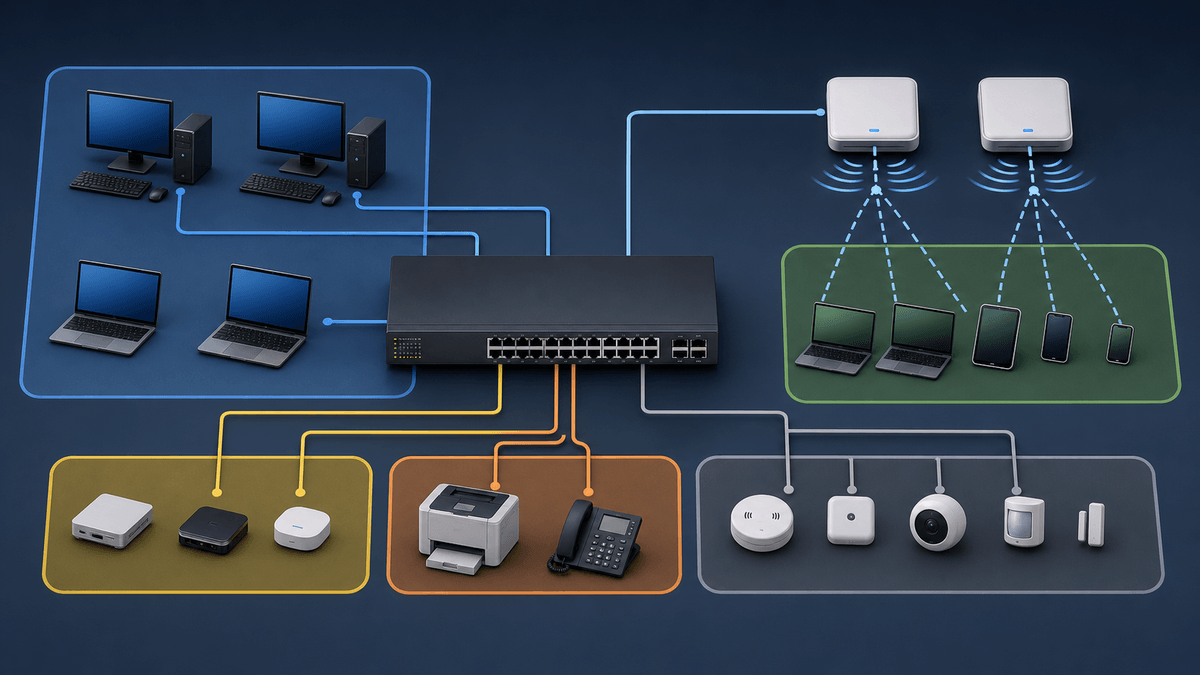
Not every device can support the same inspection. A corporate workstation, a voice phone, a camera, and a guest tablet need different profiles. Policy should define the minimum evidence and permitted access for each class. Devices with limited inspection capability can be placed in restricted segments that expose only required services.
ZDNS NACS lists terminal compliance inspection among its core capabilities. Buyers should validate which endpoint types, checks, integrations, and enforcement methods are supported in their environment. Compliance should never be implied from a device category alone.
Stage 4: Make a Specific Authorization Decision
NAC should avoid a single trusted-or-blocked decision for the entire network. Authorization can place endpoints into roles or segments with access appropriate to their identity and condition. A managed employee laptop may reach business applications. A printer may communicate only with print services and management systems. A guest device may receive internet-only access. An unknown endpoint may enter a registration or quarantine network.
Policy inputs can include:
- User identity, group, and authentication strength.
- Device identity, ownership, and management status.
- Endpoint type and supported compliance evidence.
- Connection location, switch port, SSID, VPN, or network segment.
- Requested service and business sensitivity.
- Time, risk, incident, or temporary guest status.
- Historical behavior and unresolved policy violations.
Rules should be understandable and testable. Highly complex policy can create surprising access results and make outages difficult to troubleshoot. Begin with a small role model, document precedence, and add exceptions only with owners and review dates.
Stage 5: Enforce with a Recoverable Path
Enforcement can take several forms depending on network architecture: permit, deny, assign a role or segment, redirect to registration, restrict access, or isolate an endpoint for investigation. The method should match the risk and the reliability of the evidence.
ZDNS NACS lists automatic network access blocking. Automated action can reduce response time, but organizations should define guardrails. A false classification that blocks critical devices can become an availability incident. High-impact actions need tested exceptions, change logging, operator visibility, and a recovery process.
Start with monitor-only deployment where practical. Compare recommended actions with current policy, resolve classification gaps, and measure false positives. Progress to low-risk enforcement such as guest separation before automating critical-device isolation.
Stage 6: Monitor the Session and Reassess
Access conditions can change after admission. A device can move ports, lose compliance, begin communicating with an unexpected destination, or appear through an unauthorized external connection. Continuous monitoring allows the policy to be reassessed instead of assuming the initial decision remains valid.
ZDNS NACS includes unauthorized external connection detection and network operations management in its capability set. Combined with topology and user identification, these signals can help teams investigate changes in how a device is connected and whether its access remains appropriate.
DNS can also contribute context. DNS security and resolution logs can show domain activity associated with an address. A DNS event should not automatically prove compromise, but it can enrich the risk picture and trigger a controlled NAC workflow when the identity and time correlation are strong.
Use Topology to Explain Where Access Occurred
An endpoint identity without network location is incomplete. Operations teams need to know which switch, port, access point, VLAN, or segment carried the connection. This context helps distinguish a legitimate device move from an unexpected attachment and speeds physical troubleshooting.
Automated topology discovery can also expose unmanaged paths and outdated documentation. When NAC identifies a device on an unexpected interface, the result can be compared with IPAM ownership, DHCP relay and scope, and network-device configuration.
Topology data changes, so it should include timestamps. The question during an incident is where the endpoint connected at the event time, not only where it appears now.
Connect NAC with DDI Evidence
NAC knows whether and how an endpoint was admitted. DDI helps explain the network identity used after admission. DHCP records the lease and configuration exchange. IPAM supplies address hierarchy and lifecycle. DNS records name relationships and resolution activity.
Together, these systems can answer a chain of questions:
- Which device and user requested access?
- Which policy and compliance state applied?
- Where did the device connect?
- Which address did it receive and for what period?
- Which subnet and owner governed that address?
- Which DNS activity or service relationships were observed?
- What action was taken when the state changed?
This correlation depends on consistent timestamps and identifiers. Address reassignment can produce the wrong conclusion if current IP ownership is applied to an earlier event. Preserve lease, access, and topology history.
Design Policies for Managed, Guest, and Specialized Devices
A universal endpoint policy will either be too permissive or block devices that cannot satisfy it. Group endpoints by business function and supported evidence. Managed workstations can use strong identity and posture. Guests need time-limited access and separation. Printers, phones, cameras, sensors, and operational systems need restricted communication profiles and clear owners.
Unknown devices should have a defined path. They may enter registration, receive limited diagnostic access, or be blocked according to risk. The system should tell operators why the device was classified as unknown and what evidence is required to change the decision.
Review exceptions. A temporary bypass without expiration can become permanent shadow policy. Record the approver, business reason, allowed access, compensating controls, and review date.
Roll Out NAC in Measurable Phases
Begin with discovery and topology. Compare the observed endpoint population with CMDB, DHCP, IPAM, switch, and wireless records. Resolve device ownership and classification gaps before enforcing broad policy.
Next, pilot authentication and compliance in one representative segment. Include managed endpoints, guests, printers, and devices that cannot run agents. Test normal admission, failed authentication, missing compliance, movement between ports, system outages, and recovery.
Then introduce enforcement by risk. Monitor results, create help-desk procedures, and make policy decisions visible to network and security teams. Expand only when the team can explain and reverse an incorrect action.
Measure Control Quality, Not Just Block Counts
A high number of blocked devices does not prove an effective NAC program. Track discovery coverage, devices with confirmed owners, classification confidence, authentication success, compliance failures by cause, exception age, false-positive actions, time to identify an endpoint, and time to restore access after an incorrect decision.
Also measure policy drift. Identify roles with growing exceptions, devices that remain in quarantine, and segments where topology or DHCP evidence is incomplete. Review high-impact automated actions and ensure they have supporting identity and event-time data.
Conclusion
Network access control is a continuous sequence: discover, identify, assess, authorize, enforce, monitor, and reassess. Strong NAC decisions use more than location or one credential. They combine user, device, compliance, topology, network, and historical context.
ZDNS NACS can contribute access blocking, compliance inspection, asset identification, topology discovery, operations visibility, user identification, and unauthorized connection detection. Connecting those capabilities with DHCP, IPAM, and DNS evidence helps teams make access decisions that are more specific, explainable, and recoverable.