
IPAM tools should be evaluated by the network decisions they improve, not by the number of screens in a demonstration. An enterprise platform must help teams plan address space, prevent conflicting allocations, discover what is actually connected, preserve historical ownership, coordinate DNS and DHCP, govern IPv6, and exchange reliable data with operational systems.
The buying process becomes difficult because organizations begin from different starting points. One team is replacing spreadsheets. Another has several regional IPAM databases. A third needs to unify cloud-native address managers with on-premises DNS and DHCP. Feature checklists can make very different tools look equivalent while hiding the workflows that will determine adoption and data quality.
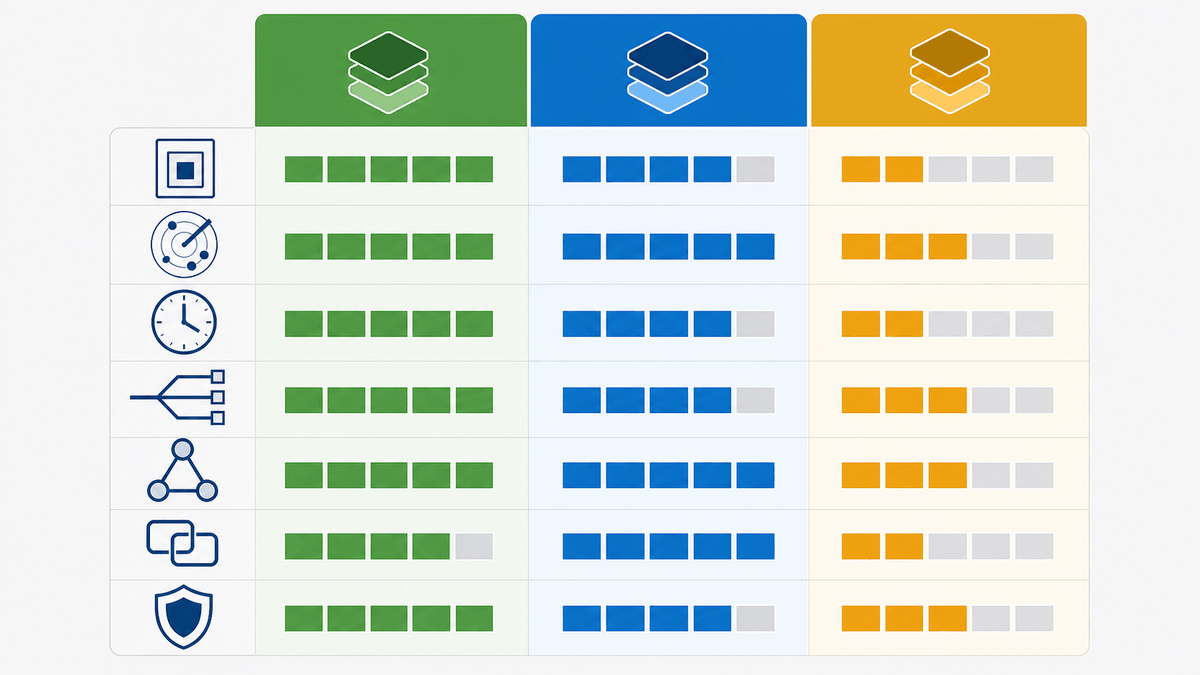
A better evaluation begins with real scenarios and required evidence. ZDNS offers IP address planning and lifecycle management connected to DHCP, discovery, endpoint assets, history, integrations, and reports. The following scorecard can be used to evaluate ZDNS and other IPAM tools on the same operational basis.
Define the Problem before Comparing Products
Write a short problem statement that is specific to the environment. "We need IPAM" is not enough. A useful statement might say that the organization cannot prevent overlapping cloud networks, cannot identify the historical owner of an address, or takes several days to provision a subnet because DNS, DHCP, and address approvals are separate.
Inventory the systems and teams in scope. Include on-premises networks, data centers, branches, wireless, VPN, public clouds, private cloud, containers, IPv6, Microsoft services, existing DHCP and DNS, CMDB, identity, ticketing, security, and automation platforms. Mark which systems will remain after the project.
Then define measurable outcomes. Examples include reducing address-allocation lead time, finding unknown active addresses, cutting stale reservations, proving event-time ownership, preventing prefix overlap, or producing utilization forecasts. These outcomes become acceptance criteria for the proof of concept.
Enterprise IPAM Tools Evaluation Scorecard
| Evaluation area | What the tool should demonstrate | Proof-of-concept evidence |
|---|---|---|
| Address planning | Hierarchical IPv4 and IPv6 plans, reservations, ownership, status, search, and conflict prevention | Create a site and IPv6 hierarchy, delegate space, attempt an overlapping allocation, and review the audit trail |
| Discovery and reconciliation | Multiple discovery methods, timestamps, unknown-device handling, confidence, and planned-versus-observed exceptions | Discover a documented endpoint, an unknown static address, and a quiet device; inspect how each result is classified |
| Lifecycle history | Time-aware ownership, status changes, assignment history, operator actions, and export | Reassign one address, then identify both owners and associated metadata at two historical timestamps |
| DNS and DHCP integration | Coordinated scopes, leases, records, DDNS, utilization, and change controls across DDI | Provision a network, allocate a lease, update DNS, retire the address, and confirm that stale state is handled |
| IPv6 operations | Prefix hierarchy, bit planning, DHCPv6 context, dual-stack correlation, and address history | Model a delegated IPv6 plan and trace one dual-stack endpoint without flattening the prefix structure |
| Integrations and automation | Documented APIs, identity and CMDB exchange, idempotent workflows, error handling, and integration monitoring | Run one create-update-retire workflow twice, force a failure, and confirm rollback, logs, and duplicate prevention |
| Resilience | High availability, backup, restore, failure visibility, and defined recovery behavior | Test a node or service failure and verify data consistency, DHCP continuity where in scope, alerts, and recovery |
| Reporting and evidence | Utilization trends, scheduled reports, customizable views, raw export, and event-time queries | Produce a capacity report and answer who owned a selected address at a specified historical time |
| Access and governance | Role-based responsibilities, approvals, audit history, delegated administration, and sensitive-data controls | Create network, security, cloud, and read-only roles and verify both permitted and denied actions |
| Migration and operations | Import validation, duplicate handling, phased cutover, administration, monitoring, support, and upgrade planning | Import a dirty sample dataset, reconcile errors, repeat the import, and document the steady-state support workflow |
Weight Criteria by Business Risk
A scorecard should not give every row the same weight. An organization adopting IPv6 may assign more weight to prefix planning and dual-stack correlation. A financial institution may prioritize lifecycle evidence, access control, and resilience. A cloud-heavy company may emphasize APIs, discovery cadence, and overlapping-address prevention.
Agree on weights before vendor demonstrations. Otherwise, impressive features can reshape the criteria after the evaluation begins. Use a simple scale, define what each score means, and require written evidence for high ratings.
Include operating cost. A capability that requires constant custom scripting, manual reconciliation, or specialized knowledge may be expensive even when the license looks attractive. Evaluate who will administer the platform, how exceptions are handled, and what happens during upgrades.
Test Discovery as a Data-Quality Workflow
Many IPAM tools advertise discovery, but the important question is what happens after an observation. Can the tool distinguish a planned address from an unknown address? Does it retain first-seen and last-seen evidence? Can it bind an endpoint to a switch interface? Does it overwrite approved data or create an exception?
ZDNS IPAM supports periodic scanning through ICMP, ARP, NetBIOS, and Nmap, as well as external network-device and switch integration. During evaluation, test the methods that fit the target environment and verify their limitations. A blocked ICMP probe should not automatically mark a critical server unused.
Measure time from resource creation to discovery and time from exception creation to resolution. Discovery that produces thousands of unowned alerts will not improve accuracy.
Require Historical Proof, Not Only Current Search
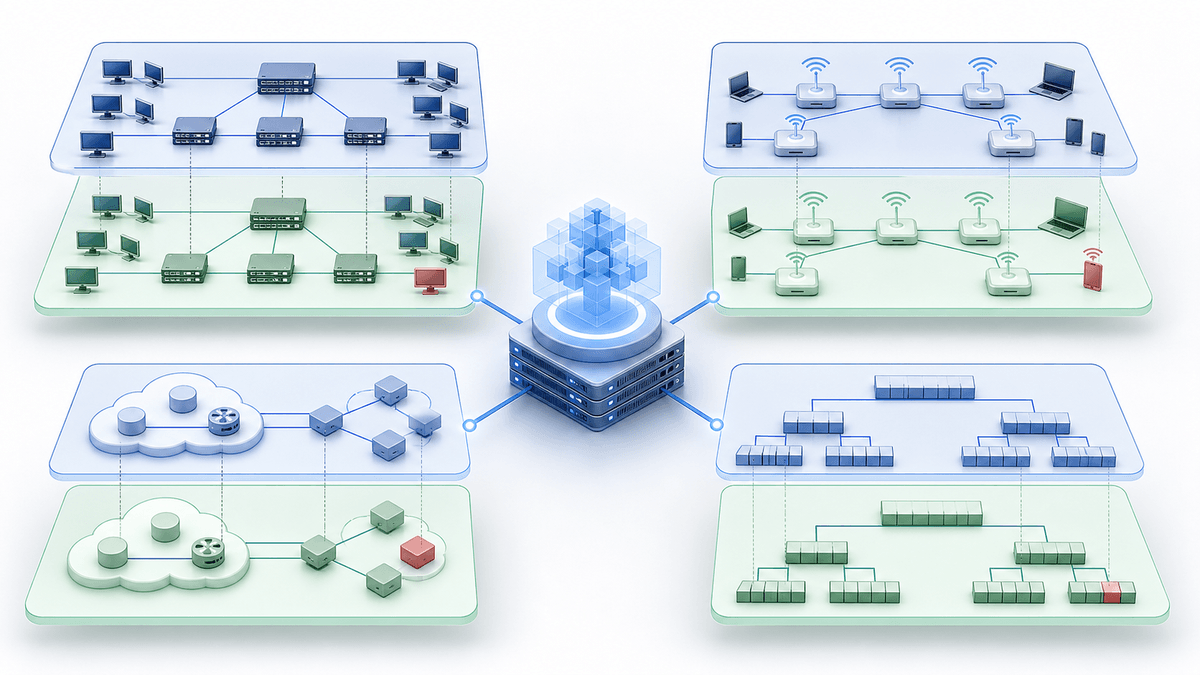
Every IPAM tool can display a current address record. Enterprise incidents require event-time context. Reassign an address during the proof of concept, change its hostname or owner, and confirm that the original relationship remains searchable.
ZDNS describes full lifecycle address history, status and information changes, historical-time selection, and export. Validate the exact retention, query, and export behavior required by the organization. Check time zones and whether data from DHCP, DNS, discovery, and external systems can be correlated for the same event.
A tool that loses history during import, synchronization, or reassignment may reduce the value of security and audit records even if the current dashboard is accurate.
Evaluate IPAM as Part of DDI
IPAM is most useful when it coordinates with DNS and DHCP. DHCP service management supplies lease and endpoint evidence. DNS operations manage name-to-address relationships. IPAM governs the address plan, ownership, and lifecycle.
Test a complete change. Create a network, define an allocation range, assign configuration, observe a lease, update a DNS record, and retire the address. Review which actions are atomic, which require separate approval, and how partial failure is handled.
If existing Microsoft, Linux, appliance, or cloud-native DNS and DHCP services will remain, require a supported coexistence and migration design. Do not assume that "integration" means full lifecycle control. It may mean read-only discovery, periodic import, event exchange, or direct management.
Make IPv6 a Practical Demonstration
Do not accept a slide stating that IPv6 is supported. Ask the team to model the organization's planned hierarchy. Allocate prefixes by site and purpose, apply semantic rules, create DHCPv6 context, and trace a dual-stack endpoint.
Evaluate how the tool handles large prefix structures, search, delegation, utilization, reservations, multiple address types, and historical changes. Confirm whether operators can work with meaningful hierarchy instead of manually reading long hexadecimal strings.
ZDNS IPAM supports bit-width-based semantic templates for IPv6 planning, while ZDNS DHCP supports IPv4/IPv6 dual stack and correlation. These are relevant capabilities, but the proof should use the buyer's addressing policy and endpoint mix.
Inspect APIs and Integration Failure Behavior
An API demo that creates one address is not enough. Test authentication, authorization, pagination, search, idempotency, validation, rate behavior, errors, audit records, and rollback. Use a realistic workflow from the organization's automation platform.
Define source ownership for integrated fields. A CMDB may own business service data, while IPAM owns address status. An identity system may contribute user context, while DHCP supplies lease evidence. The tool should expose conflicts instead of overwriting data without explanation.
Monitor the integration itself. The platform should make delayed synchronization, rejected records, permission failures, and schema changes visible. Silent integration failure is one of the fastest ways to turn an authoritative database into another stale inventory.
Run a Representative Proof of Concept
A useful proof of concept uses messy, real data and several network roles. Include one stable office network, one high-change wireless or lab scope, one cloud network, one IPv6 hierarchy, and a sample of historical records. Mask sensitive information while preserving the relationships that make the test meaningful.
Assign tasks to the people who will operate the platform, not only vendor engineers. Observe how long common actions take, which concepts require training, and how errors are recovered. Include read-only users from security, service desk, and audit teams to test whether they can answer their questions without administrative access.
Record every manual workaround. A workaround can be acceptable, but it should be included in operating cost and risk. At the end, rerun the original scenarios and compare measurable results with the current process.
Ask for Evidence behind Product Claims
Request current documentation for supported integrations, deployment models, HA behavior, limits, backup and restore, upgrade process, security controls, and data export. Separate generally available functions from roadmap items and custom services.
Useful RFP questions include:
- Which systems are managed directly, discovered read-only, or synchronized periodically?
- How is historical ownership preserved during address reassignment and migration?
- How are discovery conflicts presented and assigned?
- Which IPv6 planning and DHCPv6 workflows are supported?
- What happens to core functions when a node, site, or integration fails?
- Can all operational data be exported in a documented format?
- How are administrator actions and API changes audited?
- What training and ongoing maintenance does the proposed design require?
Conclusion
The best IPAM tools are not selected by feature count. They are selected by proving that the platform can maintain accurate address intent, reconcile observed reality, preserve history, coordinate DDI, support IPv6, survive failures, and fit the organization's operating model.
Use weighted criteria, real data, controlled failure, and end-to-end scenarios. Require evidence for both daily administration and incident-time questions. A disciplined evaluation makes it easier to choose a platform that teams will trust after the demonstration is over.