
IPv6 Adoption Is Uneven, but It Is Real
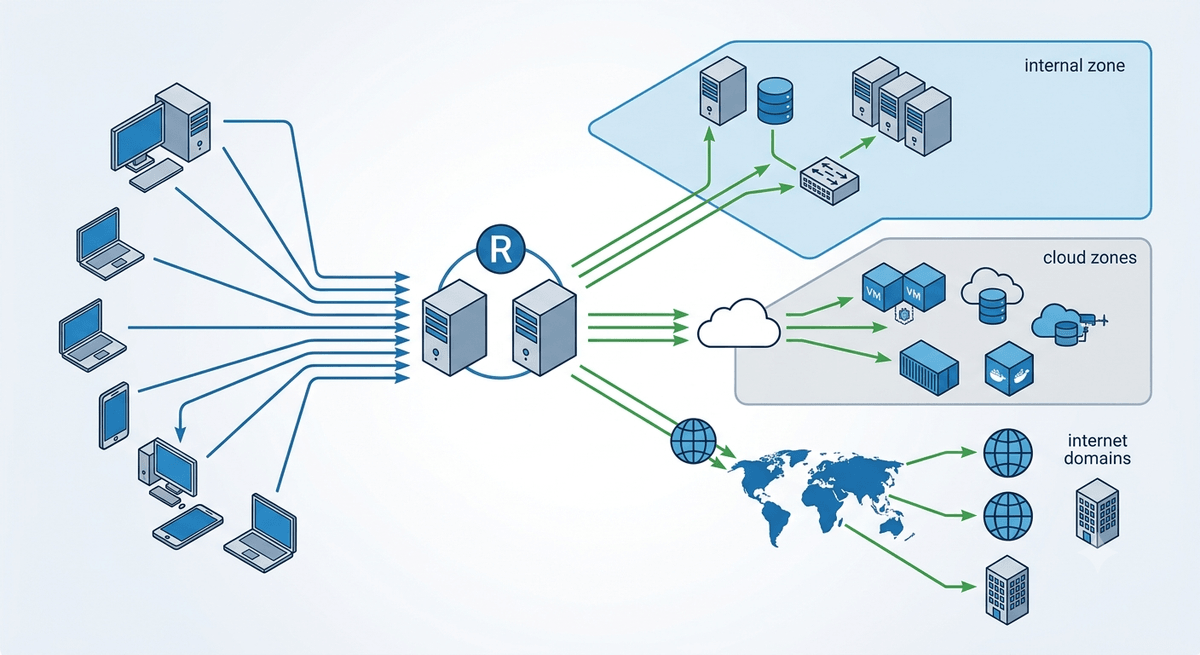
Public measurement sources, including Google's IPv6 statistics, show that IPv6 availability varies significantly by country, provider, and user population. That unevenness is important for enterprise planning. A company may have users in regions where IPv6 is common, branches where IPv6 is barely used, mobile users whose networks prefer IPv6, and cloud services that are already IPv6-capable. The result is not a single migration event. It is a long operational transition.
During that transition, disabling IPv6 everywhere is rarely a durable strategy. Modern operating systems, providers, and cloud services increasingly assume dual-stack awareness. The better approach is to know where IPv6 is active, which services are ready, which security controls cover it, and which operational tools can see it.
Address Planning Comes Before Address Volume
IPv6 provides a much larger address space than IPv4, but more space does not automatically create better governance. Poor IPv6 planning can produce confusing prefixes, inconsistent subnet models, unclear ownership, and difficult incident response. Teams should design address plans around hierarchy, location, function, routing boundaries, security zones, and operational readability.
ZDNS's IPAM page highlights network address space planning, IPv6 management complexity, dynamic address sensing, asset management, and lifecycle history. Those themes matter because IPv6 changes the scale of address data. Manual spreadsheets that were already strained under IPv4 become even less useful when teams must understand large prefixes, multiple address types, and dual-stack relationships.
DNS Changes with Dual-Stack Behavior
DNS is where many users first experience IPv6. If a service publishes an AAAA record, IPv6-capable clients may attempt the IPv6 path. If that path is incomplete, users may see delays, failed connections, or intermittent application behavior. The problem may not look like an IPv6 problem at first. It may appear as slow login, service unavailable, or inconsistent performance by location.
Before publishing IPv6 records for important services, teams should validate routing, firewall policy, load balancing, monitoring, certificates where relevant, application binding, and rollback plans. DNS records should reflect operational readiness. In dual-stack networks, A and AAAA records should be reviewed together because clients may choose between them automatically.
DHCP, Router Advertisements, and Endpoint Identity
Endpoint configuration in IPv6 environments may involve DHCPv6, router advertisements, SLAAC, or a combination of methods depending on the network design. This can change how teams identify devices and trace address history. In IPv4-only networks, DHCP lease logs often provide a familiar source of endpoint evidence. In IPv6 environments, teams may need additional visibility into address assignment, neighbor discovery, device fingerprints, and prefix behavior.
ZDNS's DHCP page discusses IPv4/IPv6 dual-stack support, address allocation, endpoint information, and configuration modules. For operations teams, the practical question is whether endpoint identity remains clear as IPv6 is introduced. During an incident, the team should be able to answer which device used an address, when it used it, and which network controls applied.
IPv6 Adoption Checklist for Network Teams
A disciplined IPv6 adoption program should include more than address allocation. Useful readiness checks include:
- Document IPv6 prefix ownership, routing boundaries, security zones, and address lifecycle rules.
- Validate DNS A and AAAA records together for critical services before publishing changes.
- Confirm that monitoring sees IPv6 reachability, latency, DNS answers, and application health.
- Review DHCPv6, SLAAC, router advertisement, and endpoint identity behavior by network segment.
- Update firewall, access control, logging, and incident response procedures for IPv6 traffic.
- Test VPN, branch, cloud, and mobile access paths because IPv6 behavior can differ by location.
- Train service owners to request IPv6 records only when the full service path is ready.
This checklist prevents IPv6 from becoming an accidental feature. It creates an operating model where teams know what has been enabled, what is monitored, and what remains intentionally out of scope.
Monitoring Must Follow the User Path
IPv6 monitoring should not be limited to device interface status. Users care whether the application works over the path their device chooses. Monitoring should test DNS answers, connection success, latency, application health, and policy behavior from representative user locations. If monitoring checks only IPv4, an IPv6-specific failure can remain invisible until users complain.
Dual-stack monitoring should also watch for asymmetry. IPv4 may work while IPv6 fails. IPv6 may work from one provider and fail from another. A firewall may permit an IPv4 path but block an IPv6 equivalent. A load balancer may be configured for one address family but not the other. Without path-aware monitoring, teams can misclassify these issues as intermittent application faults.
Security Policy Needs IPv6 Parity
IPv6 adoption can create security gaps if controls are IPv4-centric. Firewall rules, DNS security policy, access control, logging, vulnerability scanning, and asset inventory should all account for IPv6. A device that is well governed on IPv4 should not become less visible because it also has IPv6 connectivity.
For organizations that connect device visibility and access policy, ZDNS NACS is relevant to the broader question of how endpoints are discovered, classified, and controlled. IPv6 readiness is not only about address length. It is about preserving operational and security visibility across both address families.
Cloud and Application Teams Need Clear Rules
Cloud platforms and application teams may enable IPv6 faster than central network teams expect. A cloud load balancer may support IPv6. A CDN may publish IPv6-capable endpoints. A development team may request AAAA records without realizing that internal monitoring, security policy, or IPAM ownership is not ready. This is how IPv6 adoption becomes fragmented.
Clear service rules help. Define when an application is ready for IPv6 DNS records. Require validation from representative networks. Include rollback steps. Confirm that IPAM ownership and security controls are updated. For multi-site applications that rely on DNS-based traffic steering, ZDNS GSLB may fit availability planning once both IPv4 and IPv6 paths are understood.
Make IPv6 a Governance Program, Not a Side Project

IPv6 adoption is easier when it is treated as governance work. Address plans, DNS record policies, endpoint configuration, monitoring standards, and incident workflows should be updated together. The transition may happen gradually, but the rules should be intentional. Otherwise, teams discover IPv6 behavior only when a user, device, or cloud provider starts using it by default.
A good governance program does not require every service to become IPv6-enabled at once. It requires a known readiness status. Critical services can be prioritized. Legacy services can be documented. New services can follow updated patterns. The organization can then move from accidental dual-stack behavior to controlled adoption.
Conclusion
IPv6 adoption changes enterprise operations across DNS, DHCP, IPAM, monitoring, security, and application delivery. The organizations that handle it best do not treat IPv6 as a checkbox. They build an operating model for dual-stack reality: clear address planning, intentional DNS records, visible endpoint identity, path-aware monitoring, and security parity. With DDI discipline, IPv6 becomes a manageable evolution rather than a source of surprise.